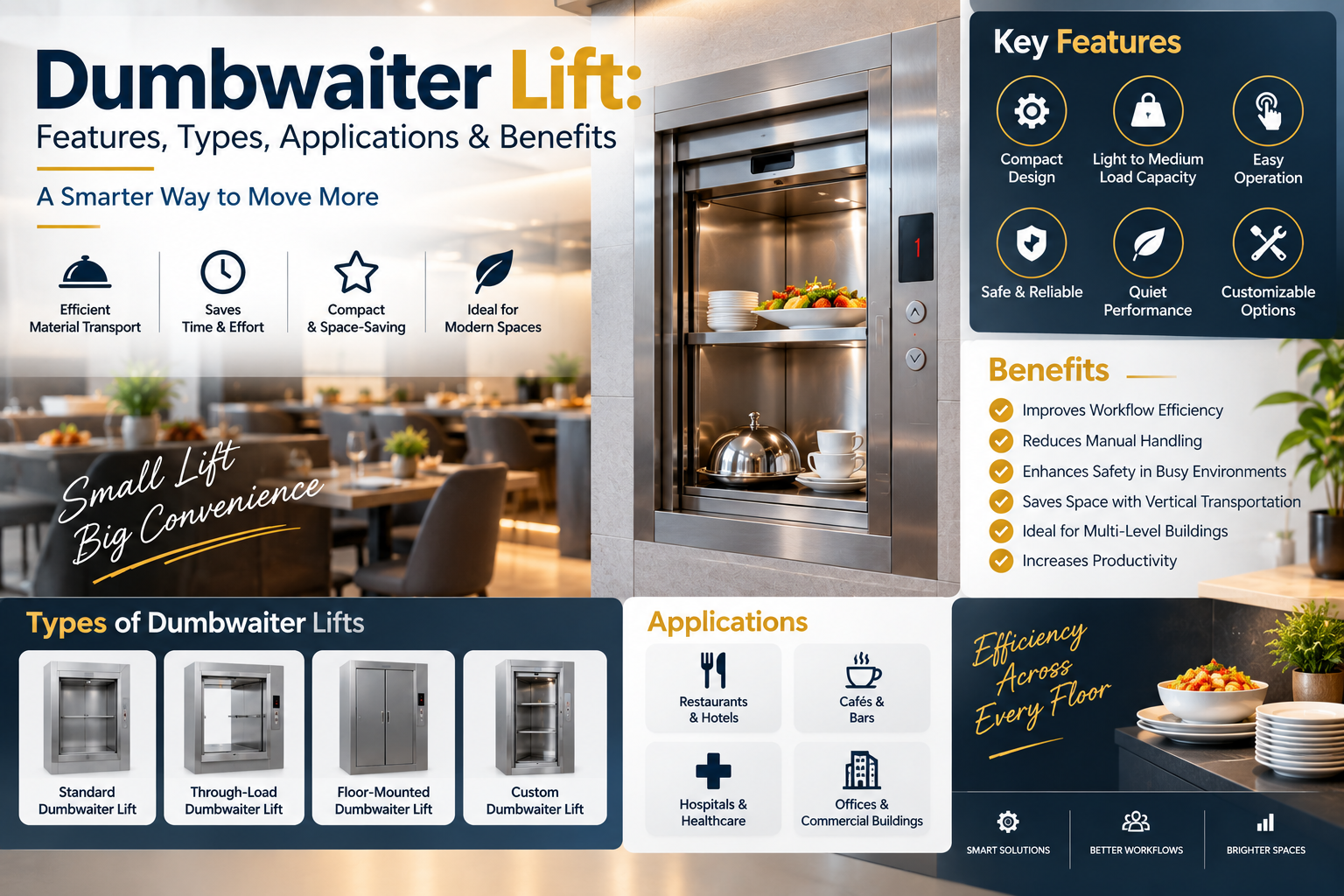
Dumbwaiter Lift: Features, Types, Applications & Benefits
A dumbwaiter lift is a compact goods lift used to move food, dishes, ingredients, documents, supplies, laundry, and other suitable items between floors. It is commonly installed in restaurants, hotels, commercial kitchens, offices, hospitals, homes, and other buildings where goods need to be moved regularly.
A dumbwaiter reduces manual carrying and makes floor-to-floor movement easier. The right lift depends on the required load capacity, cabin size, number of floors, available installation space, type of goods, and frequency of use.
Mr. Dumbwaiter provides dumbwaiter lift solutions and related services in Singapore. With 15+ years of experience, the company can help businesses select a suitable system based on their building and operating requirements. For a dumbwaiter lift requirement, contact +65 67344062.
What Is A Dumbwaiter Lift?
A dumbwaiter lift is a small vertical goods lift designed to transport items between different levels of a building. Unlike a passenger elevator, it is intended for moving goods rather than people.
The lift normally consists of a compact cabin, lifting mechanism, guide system, landing doors, controls, and safety components. Its size and capacity can be selected according to the type and quantity of goods being transported.
For example, a restaurant may use a dumbwaiter to move prepared food and dishes between a kitchen and dining area. A hotel may use one for supplies or laundry, while an office may use it for documents and small materials.
Dumbwaiters are particularly useful when goods need to travel between floors regularly but a full-size goods elevator is not required.
How Does A Dumbwaiter Lift Work?
A dumbwaiter lift moves a small cabin vertically between designated floors using a powered or specified lifting mechanism. The exact design depends on the type of system installed.
The basic operation is straightforward:
- Goods are placed inside the dumbwaiter cabin.
- The landing or cabin door is properly closed.
- The operator selects the required floor using the control system.
- The lifting mechanism moves the cabin along its guide system.
- The cabin reaches the selected landing.
- The goods are removed after the cabin has stopped safely.
Door interlocks and other safety devices are used to help prevent operation when doors are not correctly positioned. The lift should always be operated according to its design, rated capacity, and manufacturer instructions.
Dumbwaiter Lift Components And Parts
Understanding the main components helps when selecting, installing, or maintaining a dumbwaiter.
- Cabin: The cabin or compartment holds the goods being transported. Its dimensions should match the size and type of items being moved.
- Lifting Mechanism: This provides the movement needed to raise and lower the cabin. The mechanism varies according to the lift design.
- Guide System: Guide components keep the cabin moving along its intended vertical path.
- Landing Doors: Doors provide access to the cabin at each serving level and help separate the lift opening from the surrounding area.
- Control System: Controls allow the operator to call or send the cabin to the required floor.
- Safety Devices: Door interlocks, limit devices, emergency controls, and other safety components help support safe operation.
The exact components and configuration depend on the selected dumbwaiter model, capacity, installation arrangement, and building requirements.
Dumbwaiter Lift Features
The Dumbwaiter Lift Features can be selected according to the intended application. Common features include:
- Different load capacity options
- Compact cabin designs
- Multiple floor and landing configurations
- Electric operating systems
- Push-button controls
- Landing and cabin door options
- Door interlock systems
- Safety controls and limit devices
- Durable cabin construction
- Easy loading and unloading
- Custom cabin dimensions
- Different interior finishes
For food-service applications, the cabin material and interior design can be selected according to the type of goods being transported and the operating environment.
Not every application needs the same features. A restaurant that operates the lift throughout the day may require different specifications from an office using it occasionally for documents.
Dumbwaiter Lift Types
There are several Dumbwaiter Lift Types, and the appropriate option depends on the building, load, usage, and installation requirements.
- Electric Dumbwaiter Lift: An electric dumbwaiter uses a powered lifting system to move the cabin between floors. It can be suitable for regular commercial applications where goods need to be transported frequently.
- Food Dumbwaiter Lift: A food dumbwaiter is designed for applications such as restaurants, hotels, cafes, and commercial kitchens. It can be used to move prepared food, dishes, ingredients, and kitchen supplies between levels.
- Commercial Dumbwaiter Lift: Commercial dumbwaiters are used in businesses that need a dedicated system for moving small goods between floors. They can be found in restaurants, hotels, offices, retail facilities, and other commercial buildings.
- Service Dumbwaiter Lift: A service dumbwaiter is used for internal goods transportation where a compact vertical lift is required. Its dimensions and capacity can be selected according to the application.
- Custom Dumbwaiter Lift: Some buildings require a specific cabin size, capacity, door arrangement, number of stops, or installation configuration. In such cases, a dumbwaiter can be designed or configured around the site's requirements.
The final lift type should be selected after considering the goods, load, available space, number of floors, operating frequency, and installation conditions.
Dumbwaiter Lift Applications
The Dumbwaiter Lift Applications extend across several industries because the system can move suitable goods quickly between floors.
- Restaurants: Restaurants commonly use dumbwaiters to move food, dishes, ingredients, beverages, and kitchen supplies between floors. This can be useful when kitchens and dining areas are located on different levels.
- Hotels: Hotels can use dumbwaiters for food service, housekeeping supplies, laundry, and other suitable goods that need to move between floors.
- Commercial Kitchens: Large kitchens can use a dumbwaiter to move ingredients, prepared food, utensils, dishes, and supplies between preparation, storage, and service areas.
- Hospitals: Depending on the facility and lift design, dumbwaiters can be used to transport suitable supplies, documents, food items, and other goods between selected areas.
- Offices: Offices may use dumbwaiters for documents, files, stationery, packages, and other small materials.
- Residential Buildings: A compact dumbwaiter can also be used in suitable homes or multi-level properties where residents need to move selected items between floors.
- Retail And Commercial Facilities: Shops and other commercial facilities can use dumbwaiters for moving small stock, documents, supplies, and internal materials between levels.
What Can A Dumbwaiter Lift Transport?
A dumbwaiter can transport many types of suitable goods, provided they remain within the lift's rated capacity and dimensions.
Common examples include:
- Prepared food
- Plates and dishes
- Cutlery
- Ingredients
- Kitchen supplies
- Documents and files
- Laundry
- Cleaning supplies
- Small packages
- Office materials
- Retail stock
- Other suitable goods
The exact items that can be transported depend on the lift design. Heavy, oversized, unstable, hazardous, or unsuitable materials should not be placed inside the lift unless the system has been specifically designed and approved for that purpose.
A dumbwaiter is generally a goods transportation system, not a passenger lift. People should not enter or ride in a goods-only dumbwaiter.
Dumbwaiter Lift Capacity And Size
Capacity and size are two of the most important factors when selecting a dumbwaiter.
The required load capacity should be based on the heaviest items that will normally be transported, with the lift operated within its rated limit. Choosing capacity only according to average load can create problems if heavier goods are regularly transported.
Cabin size should also match the dimensions of the items. A larger cabin is not always necessary if the goods are small, while an undersized cabin can make loading difficult.
Other sizing considerations include:
- Number of floors to be served
- Distance between floors
- Available shaft or installation space
- Door dimensions
- Cabin dimensions
- Type of goods
- Frequency of operation
- Building layout
A site assessment is useful before finalizing the lift specification because the available space can affect the possible cabin size and installation arrangement.
Benefits Of Dumbwaiter Lift
The Benefits Of Dumbwaiter Lift systems make them useful for businesses and buildings that regularly move goods between floors.
- Saves Time: Staff can move suitable goods between levels without repeatedly carrying them up or down stairs.
- Reduces Manual Carrying: A dumbwaiter reduces the need for staff to manually transport food, supplies, documents, and other suitable items between floors.
- Supports Faster Workflow: In restaurants and commercial kitchens, moving items between levels through a dedicated lift can make internal operations more organized.
- Uses Less Space Than A Full-Size Goods Lift: A dumbwaiter has a compact design and can be suitable where a large goods elevator would not be necessary.
- Improves Internal Goods Movement: A dedicated lift provides a consistent method for moving selected items between designated floors.
- Suitable For Multiple Industries: Dumbwaiters can be used in restaurants, hotels, offices, hospitals, homes, retail facilities, and other suitable buildings.
How To Choose The Right Dumbwaiter Lift?
Choosing the right dumbwaiter starts with understanding the actual requirements of the building.
- Determine the Load Capacity: Identify the maximum weight that will need to be transported regularly. The selected lift should have a suitable rated capacity for the intended goods.
- Check the Cabin Size: Measure the typical goods being transported and select a cabin that allows practical loading and unloading.
- Count the Required Stops: Determine which floors need to be connected. The number of stops affects the lift configuration and installation requirements.
- Check Available Space: Measure the proposed installation area and identify the available shaft, wall, floor, landing, and access space.
- Consider the Goods: Food, dishes, documents, laundry, supplies, and other goods may have different requirements for cabin design and materials.
- Consider Usage Frequency: A lift used continuously in a busy restaurant may require different specifications from one used occasionally in an office.
- Check Safety Features: Review the door interlocks, controls, emergency features, limit devices, and other safety components included with the system.
- Consider Installation And Service: Choose a supplier that can support the project with appropriate installation, maintenance, repair, and replacement services when required.
Dumbwaiter Lift Installation Requirements
Dumbwaiter installation starts with checking the building and proposed installation location. The exact requirements vary according to the lift design and site conditions.
Important considerations include:
- Available shaft or enclosure space
- Cabin dimensions
- Number of floors and stops
- Landing openings
- Door arrangement
- Electrical supply
- Structural conditions
- Access for installation
- Control system location
- Required safety provisions
Existing buildings may require additional planning because walls, floors, shafts, and other structural elements can affect the installation.
A professional site assessment can help identify these requirements before the lift is ordered. The final installation should follow the equipment specifications and applicable local requirements.
Mr. Dumbwaiter can assess the available space, intended use, load requirements, and number of floors to help businesses select a suitable dumbwaiter lift solution in Singapore.
Dumbwaiter Lift Cost Factors
The cost of a dumbwaiter lift depends on the specifications and installation conditions rather than one fixed price.
Important cost factors can include:
- Lift capacity
- Cabin size
- Number of floors
- Number of stops
- Door configuration
- Cabin material and finish
- Control system
- Installation requirements
- Building modifications
- Customization
- Maintenance and service requirements
A basic system for a straightforward installation may have different costs from a customized system serving several floors.
For an accurate estimate, the supplier normally needs information about the building, required capacity, number of floors, available space, intended use, and installation conditions.
Dumbwaiter Lift Maintenance And Safety
Regular maintenance helps keep a dumbwaiter operating correctly and allows potential issues to be identified early.
Maintenance checks may include:
- Door operation
- Door interlocks
- Control buttons
- Lifting mechanism
- Guide components
- Safety devices
- Electrical components
- Cabin condition
- Unusual noise or vibration
- General operating performance
The cabin should be kept clean and should never be loaded beyond its rated capacity. Goods should be positioned securely so they do not shift during movement.
Users should also follow the operating instructions and should never use a goods-only dumbwaiter as a passenger lift.
The recommended maintenance frequency depends on the equipment, usage level, operating environment, and manufacturer's requirements. Professional inspection and servicing should be carried out when required.