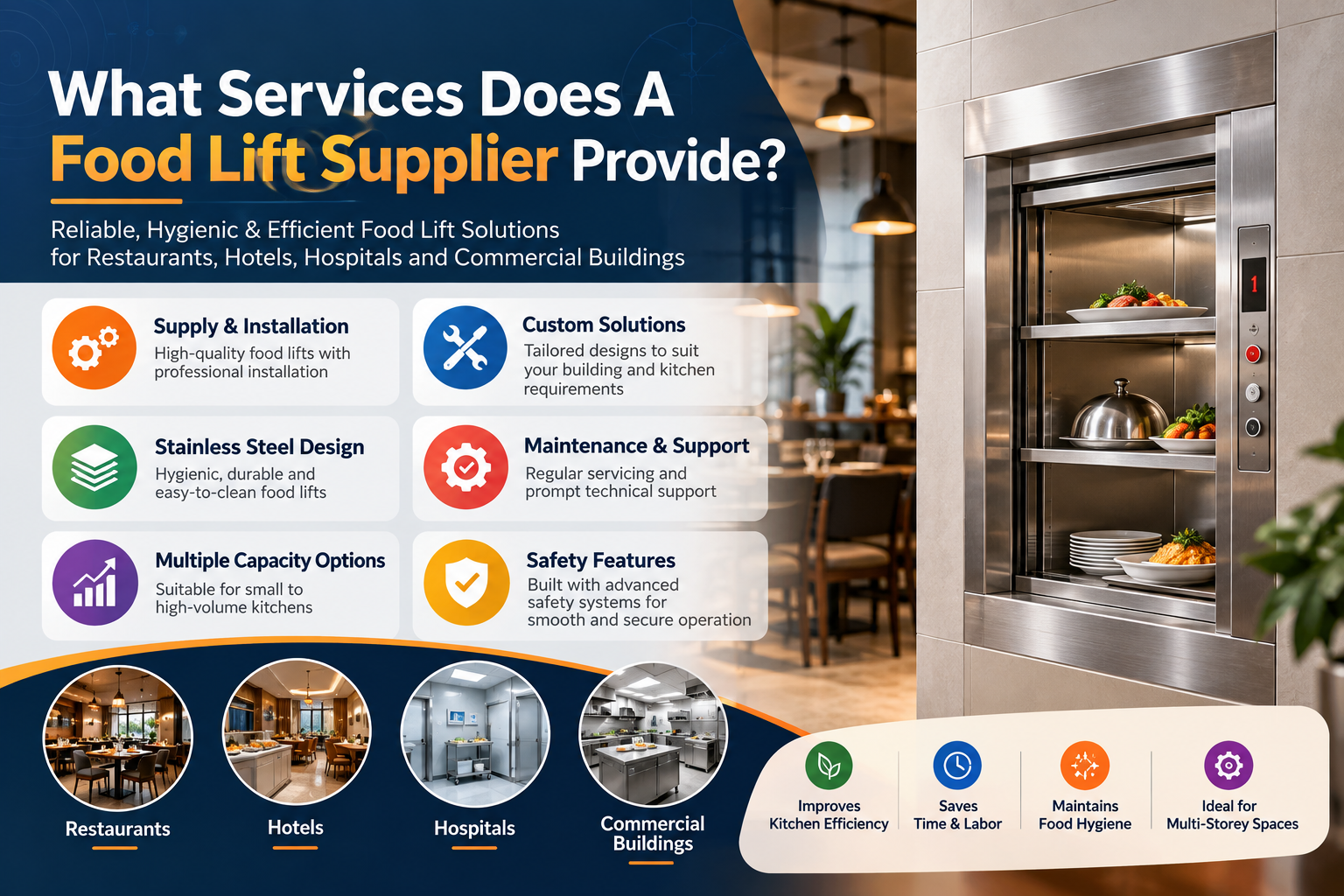
A food lift supplier can provide much more than the equipment itself. Depending on your restaurant, commercial kitchen, hotel, or other building requirements, a food lift supplier may assist with product selection, capacity planning, site requirements, supply, installation, maintenance, repair, replacement, and ongoing service.
Understanding these services before choosing a supplier can help you avoid buying equipment that does not match your actual requirements. A reliable supplier should be able to discuss what you need to move, the required load capacity, cabin size, number of floors, available installation space, and expected usage.
Mr.Dumbwaiter has 15+ years of experience in food lift and dumbwaiter solutions, supporting customers with supply, installation, repair, replacement, and maintenance requirements. If you need a food lift or want to discuss an existing system, contact Mr.Dumbwaiter at +65 67344062.
What Services Does A Food Lift Supplier Provide?
The services offered by a food lift supplier can vary from company to company, but a complete supplier may support the project from the initial requirement through installation and future servicing.
Common services include:
- Food lift selection
- Requirement assessment
- Capacity and size discussion
- Food lift supply
- Installation
- Testing and setup
- Maintenance
- Repair
- Replacement
- Upgrades
- Spare-part support
- Technical assistance
The important point is that buying a food lift is usually not just a product purchase. Installation, service, and future maintenance can also affect the overall experience and long-term usefulness of the equipment.
Food Lift Requirement Assessment
The first service should be understanding what the customer actually needs.
A supplier may ask questions about:
- What items will be transported
- Maximum expected load
- Size of trays and containers
- Number of floors
- Travel distance
- Available installation space
- Frequency of use
- Existing lift conditions
- New installation or replacement requirement
This information helps the supplier understand the application before discussing a suitable food lift.
For example, a restaurant that mainly moves small food trays may have different requirements from a busy kitchen that regularly transports larger or heavier loads.
A proper discussion at the beginning can make the selection process much clearer.
Food Lift Size And Capacity Selection
Choosing the correct capacity is one of the most important parts of a food lift project.
The supplier should understand the weight you expect to transport and the dimensions of the goods going into the cabin. Capacity should not be selected simply because a particular model is popular or available.
Cabin dimensions also matter.
The supplier should consider:
- Cabin width
- Cabin depth
- Cabin height
- Door opening
- Tray dimensions
- Container size
- Maximum regular load
A food lift should be practical for the way your staff will actually use it.
This is why discussing your application with the supplier before ordering can be more useful than choosing a product based only on a specification sheet.
Food Lift Supply
Food lift supply is the basic service most customers expect from a supplier.
However, you should still check exactly what is included in the supply.
Ask about:
- Food lift specifications
- Load capacity
- Cabin dimensions
- Number of stops
- Controls
- Door arrangement
- Included components
- Warranty terms
- Installation scope
A clear quotation should help you understand what equipment you are receiving and what additional work may be required.
Do not compare suppliers only by the final price. Two quotations may have different specifications or include different services.
Food Lift Installation
Installation is another important service provided by food lift suppliers.
The equipment needs to be installed according to the building conditions and the requirements of the selected system. Before installation, the supplier may need to discuss available space, shaft or installation arrangements, landing positions, access, and other site conditions.
For an existing restaurant, installation can require careful planning because the available building space may already be fixed.
Ask the supplier:
- What space is required?
- What preparation is needed?
- Who will handle installation?
- What is included in the installation cost?
- What testing is carried out after installation?
- What information will staff receive about operation?
Understanding these points before the project starts can prevent confusion later.
Food Lift Testing And Setup
After installation, the equipment should be checked before regular use.
Testing and setup may involve checking the operation of the lift, controls, doors, movement, and other relevant functions.
The exact process depends on the equipment and installation requirements.
As a customer, you should ask the supplier what testing and handover process is included in the project.
A professional supplier should be able to explain the basic operating process and provide relevant information for safe use and future servicing.
Food Lift Maintenance
Regular maintenance is an important part of keeping a food lift in usable condition.
Like other mechanical equipment, a food lift can require inspection, servicing, adjustment, cleaning, replacement of worn components, or other maintenance work over time.
Maintenance requirements can depend on factors such as:
- Frequency of use
- Equipment type
- Operating environment
- Age of the lift
- Usage conditions
Restaurant equipment can experience regular daily use, so it is useful to discuss maintenance requirements before purchasing.
Ask your supplier what type of maintenance support they provide and how you can arrange service when required.
Food Lift Repair
A food lift may eventually require repair due to wear, component problems, electrical issues, door problems, or other faults.
When a breakdown affects restaurant operations, getting the issue assessed quickly becomes important.
A supplier that provides repair support can help customers address problems with their existing food lift.
Before choosing a supplier, ask whether they provide:
- Food lift troubleshooting
- Repair services
- Component replacement
- Existing lift servicing
- Repair for older equipment
- Technical support
It is better to understand the available repair support before a problem occurs.
Food Lift Replacement
Sometimes repairing an existing food lift may not be the most practical option.
An older system may have repeated problems, outdated components, increased maintenance needs, or requirements that no longer match the restaurant's operation.
In such situations, a supplier may discuss replacement options.
The replacement process should begin with an assessment of the existing system and the customer's current requirements.
Your restaurant may have changed since the original lift was installed. The new requirement could involve different capacity, cabin dimensions, usage patterns, or installation conditions.
A supplier should therefore assess the current situation rather than simply replacing the old equipment with an identical setup.
Food Lift Upgrade Services
In some cases, a complete replacement may not be necessary.
Depending on the condition and configuration of the existing equipment, an upgrade may be worth discussing.
Possible upgrade requirements can involve equipment components, controls, doors, or other parts of the system.
Whether an upgrade is suitable depends on the existing food lift and the work required.
A supplier can inspect or discuss the existing system and help determine whether repair, upgrade, or replacement should be considered.
Spare Parts And Component Support
Long-term food lift service can also involve replacement components.
Ask the supplier whether they can assist when a component needs replacement and whether relevant spare parts are available for the equipment they supply or service.
This is particularly important for customers who want to maintain an existing food lift over a longer period.
A supplier relationship becomes more useful when customers know where to turn when a component requires attention.
Food Lift Service For Existing Equipment
You do not always have to purchase a new food lift to work with a supplier.
Some customers may already have a food lift that needs:
- Repair
- Maintenance
- Inspection
- Replacement components
- Upgrading
- Replacement planning
When contacting a supplier about an existing system, provide as much information as possible about the equipment, its current condition, the problem you are experiencing, and how the lift is being used.
This gives the supplier a better starting point for discussing the next step.
Why Choose A Food Lift Supplier That Provides Complete Support?
Choosing a supplier only for equipment supply can leave you looking for different companies when installation, maintenance, or repair is required.
A supplier that can support multiple stages of the project can make communication easier.
Instead of dealing with separate contacts for every requirement, you can build a working relationship with one experienced company that understands your equipment and application.
This can be particularly useful when the food lift becomes an important part of your restaurant's daily operation.
Why Choose Mr.Dumbwaiter For Food Lift Services?
Choosing a food lift supplier is a long-term decision. You are not only selecting equipment; you are also choosing the company you may contact for installation, maintenance, repair, replacement, and future requirements.
Mr.Dumbwaiter has 15+ years of experience in food lift and dumbwaiter solutions.
The company supports customers with requirements related to:
- Food lift supply
- Food lift installation
- Food lift repair
- Food lift maintenance
- Food lift replacement
- Dumbwaiter solutions
- Existing equipment support
The focus is on understanding the customer's requirement and discussing a suitable solution instead of treating every project exactly the same way.
A restaurant may have limited installation space, a specific load requirement, multiple floors, frequent usage, or an existing food lift that needs attention. These details should be discussed before deciding what equipment or service is appropriate.
Commitment Beyond The Initial Sale
A food lift becomes part of your daily restaurant operation. That means your relationship with the supplier should not end after the equipment has been supplied.
Future requirements may include maintenance, repairs, replacement components, upgrades, or a complete replacement.
Mr.Dumbwaiter focuses on building a long-term customer relationship through clear communication and support around food lift and dumbwaiter requirements.
The goal is to give customers confidence when discussing their project and to make the process easier to understand before they make a commitment.
If you are unsure which food lift service you need, you can explain your current situation to the team and discuss the next practical step.
How Do You Know Which Food Lift Service You Need?
Your requirement usually determines the service you need.
- For a new restaurant: You may need requirement assessment, food lift selection, supply, installation, and setup.
- For an existing restaurant: You may need maintenance, repair, an upgrade, or replacement.
- For an older food lift: You may need an assessment to determine whether repair, replacement components, upgrading, or replacement should be considered.
- For a restaurant expansion: You may need a new food lift or changes to the existing setup based on increased usage.
The best starting point is to explain what you are trying to achieve rather than choosing a service name without discussing the actual problem.
Questions To Ask A Food Lift Supplier Before Hiring Them
Before selecting a supplier, ask clear questions about the complete service.
- Do you supply food lifts for restaurant applications?
- Can you help select the appropriate capacity?
- Can you discuss cabin size based on our requirements?
- Do you provide installation?
- Do you provide food lift maintenance?
- Can you repair an existing food lift?
- Do you provide replacement services?
- Can you assist with spare parts?
- What is included in the quotation?
- What support is available after installation?
The answers can help you understand whether the supplier can support your requirement beyond the initial purchase.
How To Choose The Right Food Lift Supplier
Choosing the right supplier becomes easier when you follow a few simple steps.
- Understand Your Requirement: Know what you want to transport, the approximate load, item dimensions, number of floors, and expected usage.
- Ask About The Complete Service: Do not ask only about the equipment price. Ask about installation, maintenance, repair, replacement, and future support.
- Check Experience: Consider how long the supplier has been working with food lift and dumbwaiter requirements.
- Compare Specifications: Compare capacity, cabin size, configuration, installation scope, and other relevant specifications.
- Understand The Quotation: Make sure you know exactly what is included before making a commitment.
- Consider The Long-Term Relationship: Choose a supplier you can communicate with when you need service or have a future requirement.
Contact Mr.Dumbwaiter For Food Lift Services
If you need a new food lift, installation support, maintenance, repair, replacement, or assistance with an existing system, the first step is to discuss your actual requirement.
Tell the supplier what you need to move, how much it weighs, how many floors are involved, what space is available, and whether you are looking for a new installation or support for an existing food lift.
Mr.Dumbwaiter has 15+ years of experience and can discuss food lift and dumbwaiter requirements with you based on your application.
You do not have to make the decision without asking questions first. Discuss your requirement, understand the available options, and choose the service that fits your situation.
Call Mr.Dumbwaiter at +65 67344062 to discuss your food lift requirement with the team.
Conclusion
A food lift supplier can provide much more than equipment supply. Depending on your requirement, services may include product selection, capacity and size planning, supply, installation, testing, maintenance, repair, replacement, upgrades, and ongoing support.
The right supplier should be willing to understand your restaurant's actual needs and remain available when you require assistance in the future.
If you want a supplier relationship built around experience, commitment, clear communication, and ongoing support, Mr.Dumbwaiter can be a practical choice for your food lift and dumbwaiter requirements.
With 15+ years of experience, Mr.Dumbwaiter is available to discuss new installations as well as repair, maintenance, replacement, and other food lift requirements.
Call +65 67344062 and speak with Mr.Dumbwaiter about your project.