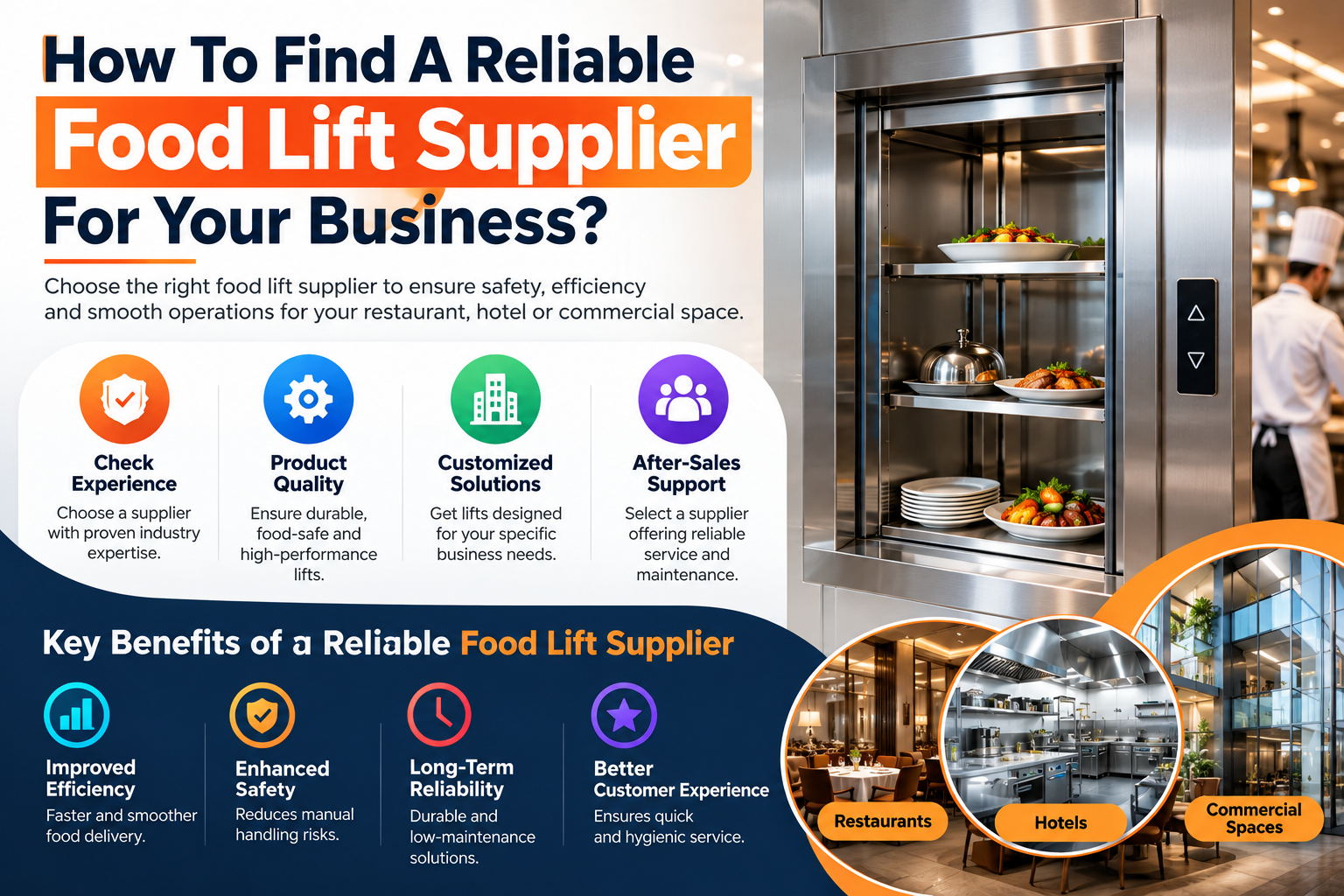
Finding a reliable food lift supplier is an important step when your business needs a safe and practical way to move food, dishes, trays, ingredients, or other goods between floors. The right supplier should offer more than a product. You should be able to discuss your requirements, understand the available options, arrange installation, and get support when maintenance or repair is needed.
Before choosing a supplier, look at their experience, product suitability, installation service, repair and maintenance support, communication, and overall commitment to customers. A low price alone does not tell you whether a supplier is right for your project.
Mr.Dumbwaiter has 15+ years of experience in food lift and dumbwaiter solutions, supporting requirements for supply, installation, repair, replacement, and maintenance. If you are looking for a food lift supplier for your business, contact Mr.Dumbwaiter at +65 67344062 to discuss your requirements.
What Makes A Food Lift Supplier Reliable?
A reliable supplier should be able to understand your application before recommending equipment.
Your business may have specific requirements based on the goods being transported, load capacity, cabin dimensions, number of floors, available installation space, and frequency of use.
Look for a supplier that can clearly discuss:
- Food lift capacity
- Cabin size
- Installation requirements
- Number of floors
- Operating requirements
- Safety considerations
- Maintenance
- Repair support
- Replacement options
- Spare parts
- After-sales service
The supplier should also communicate clearly about what is included in the quotation and what services you can expect after the installation.
Check The Supplier’s Experience
Experience is one of the first things worth checking when selecting a food lift supplier.
An experienced supplier may have dealt with different installation conditions, load requirements, building layouts, repair situations, and customer needs. This can make it easier to discuss your project and identify questions that need to be answered before you place an order.
However, do not look at the number of years alone. Ask what the supplier actually provides and whether those services match your requirement.
For example, if you need a new food lift as well as future maintenance, choose a supplier that can discuss both rather than only supplying the equipment.
Understand What Your Business Needs Before Contacting A Supplier
You do not need to know every technical detail before contacting a supplier, but having basic information about your requirement can make the conversation more useful.
Consider:
- What will the lift transport?
- What is the approximate maximum load?
- What are the dimensions of the largest items?
- How many floors need to be connected?
- How frequently will the lift be used?
- Is this a new installation or replacement?
- How much installation space is available?
- Will you need future maintenance or repair?
This information gives the supplier a better understanding of your application.
A reliable supplier should then ask additional questions rather than simply giving you a generic product recommendation.
Check The Food Lift Capacity
Capacity is an important part of selecting a food lift.
The supplier needs to know the weight of the goods you expect to transport. Consider the complete load rather than looking at only one item.
For example, if your staff regularly move multiple food trays or containers together, the combined load should be considered when discussing the required capacity.
Also think about future use. If your business may increase its operation, discuss whether your current requirement is likely to change.
The right supplier should explain the capacity options clearly so you understand why a particular specification is being considered.
Check The Cabin Size And Loading Requirements
A food lift must have enough internal space for the items your business needs to move.
A suitable cabin should be considered based on the dimensions of your regular goods, not just the weight.
Discuss:
- Cabin width
- Cabin depth
- Cabin height
- Door opening
- Tray dimensions
- Container dimensions
- Loading and unloading space
This is especially important for businesses that regularly move larger trays or several containers at once.
A supplier that asks about the actual items you plan to transport is in a better position to discuss an appropriate cabin configuration.
Ask About Installation Before Buying
Installation should be discussed before you finalize the equipment.
The available building space can affect the type and configuration of food lift that can be installed. Existing buildings may also have limitations that need to be considered during planning.
Ask the supplier about:
- Required shaft or installation space
- Landing positions
- Floor levels
- Access requirements
- Electrical requirements
- Site preparation
- Installation work
- Testing after installation
A reliable supplier should be willing to discuss these points before you commit to the purchase.
This can help reduce unexpected requirements during installation.
Look For A Supplier That Provides Maintenance
Your relationship with the supplier should not end when the food lift is installed.
Regular maintenance can be an important part of keeping equipment operating properly over time. The exact maintenance requirements depend on the equipment, operating conditions, and frequency of use.
Before selecting a supplier, ask:
- Do you provide maintenance?
- How can service be arranged?
- Can you support existing food lifts?
- What happens when components need replacement?
- Can you provide ongoing technical support?
Knowing the answers before buying can give you greater confidence in the supplier.
Check Food Lift Repair Support
Repair support is another important factor.
A food lift may eventually experience mechanical, electrical, door, control, or component-related problems. When the equipment is part of your regular business operation, you need to know who to contact when something goes wrong.
Ask whether the supplier provides:
- Food lift troubleshooting
- Repair services
- Component replacement
- Existing lift repair
- Maintenance support
- Replacement advice
It is better to check this before you need an emergency repair.
Ask Whether The Supplier Handles Replacement And Upgrades
Your business requirements can change over time.
An existing food lift may become outdated, require frequent repairs, or no longer provide the capacity your business needs. In other cases, an upgrade may be worth discussing instead of replacing the complete system.
A supplier that handles replacement and upgrade requirements can continue supporting you as your needs change.
If you already have a food lift, provide the supplier with information about the existing equipment and explain what has changed. This allows the discussion to focus on your current requirement.
Compare Food Lift Suppliers Beyond Price
Price is important, but it should not be the only factor.
When comparing suppliers, check whether each quotation includes the same equipment and services.
Compare:
- Capacity
- Cabin dimensions
- Equipment specification
- Number of floors
- Installation
- Testing
- Warranty
- Maintenance
- Repair support
- Replacement support
- Spare parts
- Other project costs
A lower quotation may not include the same scope as another supplier's quotation.
Instead of asking only, “Who offers the lowest price?”, ask:
“What am I receiving for the quoted price, and will this supplier support me after installation?”
That gives you a more useful basis for comparison.
Check How Clearly The Supplier Communicates
Good communication is an important part of a reliable supplier relationship.
The supplier should be willing to answer your questions and explain technical details in a way you can understand.
Pay attention to whether they:
- Listen to your requirements
- Ask relevant questions
- Explain specifications clearly
- Give you a detailed quotation
- Discuss installation requirements
- Explain service options
- Respond to concerns
- Provide clear next steps
You should feel comfortable asking questions before making a purchase.
A supplier relationship works better when both sides understand what is being supplied and what support is expected.
Ask What Is Included In The Quotation
Before accepting a quotation, read the details carefully.
A complete quotation should make it easier to understand the scope of the project.
Check whether it includes:
- Food lift equipment
- Installation
- Required accessories
- Testing
- Transportation or delivery, where applicable
- Warranty information
- Maintenance options
- Other charges
If something is unclear, ask the supplier before making a commitment.
Clear pricing and clear service terms can help avoid misunderstandings later.
Check The Supplier’s After-Sales Support
After-sales support can become important once your food lift is in regular use.
You may eventually need maintenance, repairs, replacement components, troubleshooting, or advice about changes to your equipment.
Ask the supplier what support is available after installation and how you can contact them when you need assistance.
A supplier that stays involved beyond the initial sale can become a useful long-term business contact.
Why Choose Mr.Dumbwaiter As Your Food Lift Supplier?
When choosing a food lift supplier, confidence comes from more than a product specification. You want to know that the company understands your requirement and is willing to support you through different stages of the project.
Mr.Dumbwaiter has 15+ years of experience in food lift and dumbwaiter solutions.
The company supports customers with:
- Food lift supply
- Food lift installation
- Food lift repair
- Food lift maintenance
- Food lift replacement
- Dumbwaiter solutions
- Existing equipment support
The focus is on discussing the customer's actual requirement rather than treating every business as if it needs the same solution.
Your business may have a particular load, limited space, several floors, frequent usage, or an existing food lift that needs repair or replacement. These details can all be discussed before deciding on the next step.
A Supplier Relationship Built On Commitment
Choosing a supplier is also about choosing a company you can continue communicating with after the initial purchase.
A food lift may require maintenance or repair in the future. Your business may expand. Your equipment requirements may change. You may eventually need a replacement or upgrade.
That is why a long-term relationship matters.
Mr.Dumbwaiter focuses on customer communication and ongoing support around food lift and dumbwaiter requirements. The aim is to give customers confidence when discussing their project and to remain a useful point of contact as their requirements develop.
You can discuss your application, ask questions, explain your concerns, and understand the available service options before making a decision.
Questions To Ask A Food Lift Supplier Before Choosing One
Before selecting your supplier, ask these practical questions:
- How much experience do you have with food lift requirements?
- What capacity would suit my business?
- What cabin size should I consider?
- What installation space is required?
- Do you provide installation?
- Do you provide maintenance after installation?
- Can you repair an existing food lift?
- Do you handle food lift replacement?
- What is included in the quotation?
- What support is available after the sale?
The answers can help you understand whether the supplier is suitable for your project.
What Are The Signs Of A Supplier You Can Work With Long Term?
A supplier relationship is more likely to work well when the company:
- Understands your application
- Gives clear answers
- Explains the equipment
- Provides transparent quotations
- Discusses installation properly
- Offers maintenance and repair support
- Communicates consistently
- Takes future requirements seriously
You should not feel pressured to make a decision without understanding what you are purchasing.
Take the time to ask questions and compare the information you receive.
A Simple Checklist For Choosing A Reliable Food Lift Supplier
Before making your final decision, check these points:
- Experience: Does the supplier have relevant experience?
- Product suitability: Does the proposed food lift match your load and size requirements?
- Installation: Can the supplier explain the installation requirements?
- Service: Is maintenance available?
- Repair: Can the supplier assist if the equipment develops a problem?
- Replacement: Can they support you if the existing equipment needs to be replaced?
- Communication: Are your questions answered clearly?
- Quotation: Do you understand exactly what is included?
- Long-term support: Can you continue working with the supplier after installation?
If the answer to these questions is clear, you can make your decision with greater confidence.
Contact Mr.Dumbwaiter For Your Food Lift Requirement
If you are searching for a reliable food lift supplier for your business, start by discussing your actual application.
Tell the supplier what you need to transport, the approximate load, the number of floors, available space, and whether you need a new installation, repair, maintenance, replacement, or upgrade.
Mr.Dumbwaiter has 15+ years of experience and can discuss your food lift or dumbwaiter requirement based on your business needs.
You do not need to decide everything before making contact. A conversation can help you understand the important requirements and determine which service is relevant to your project.
Call Mr.Dumbwaiter at +65 67344062 and discuss your food lift requirement with the team.
Conclusion
Finding a reliable food lift supplier is about more than comparing prices. Look at experience, equipment suitability, capacity, cabin size, installation, maintenance, repair support, replacement options, communication, and long-term customer service.
The right supplier should listen to your requirements, explain your options clearly, and remain available when you need support in the future.
For businesses looking for a food lift supplier with 15+ years of experience, Mr.Dumbwaiter provides support across food lift supply, installation, repair, maintenance, and replacement requirements.
If you want to build a supplier relationship based on confidence, communication, and commitment, contact Mr.Dumbwaiter at +65 67344062 and discuss your business requirement with the team.